Indonesia: The Roaring Tiger in India's Neighbourhood
Indonesia is emerging as a significant global power and a potential partner for India in reshaping the geopolitical and economic landscape of Asia. From its geography and history to its transformation into a stable democracy, Indonesia’s journey highlights the promising future of India-Indonesia relations and the possibility of a new Asian Century.
The Indonesian Archipelago: A Geographic Marvel
Indonesia is the world’s largest archipelago, comparable in size to the United States but spread across thousands of islands. Stretching more than 5,000 kilometres from east to west, the country occupies critical shipping lanes linking the Indian and Pacific Oceans.
With more than 17,500 islands, Indonesia’s geography gives it significant maritime influence and access to extensive natural resources. The nation has substantial reserves of oil, natural gas, coal, and minerals. Its vast coastlines also support one of the world’s richest marine ecosystems and fisheries, providing Indonesia with both economic advantages and strategic importance in the Indo-Pacific region.
Demographic Profile: Unity in Diversity
Indonesia’s population of around 276 million makes it the fourth most populous country in the world and the largest in Southeast Asia. This large population provides a strong workforce and consumer base that supports economic growth.
Indonesia also benefits from a favourable demographic profile, with nearly half of its population under the age of 30. This young workforce contributes to innovation and economic dynamism. Most of the population is concentrated in Java, Sumatra, and Borneo.
Although Indonesia is home to the world’s largest Muslim population, with approximately 87% of citizens identifying as Muslim, it maintains a secular government. The constitution officially recognises six religions: Islam, Protestantism, Catholicism, Hinduism, Buddhism, and Confucianism. This diversity is reflected in the national motto, “Bhinneka Tunggal Ika” or “Unity in Diversity.”
Indonesia is also one of the most culturally diverse countries in the world, with more than 300 ethnic groups and 700 languages.
Historical Journey: Colonial Past to Independence
Indonesia’s modern history has been shaped by colonial rule, the struggle for independence, and periods of authoritarianism before its democratic transformation.
For more than three centuries, the Dutch East India Company and later the Dutch colonial administration controlled Indonesia, exploiting its resources and implementing policies that continue to influence the country today.
Indonesia declared independence from Dutch rule in 1945 under the leadership of Sukarno. As the country’s first president, Sukarno promoted nationalism, non-alignment, and anti-imperialism.
In 1965-66, General Suharto came to power during a period of political turmoil and established the “New Order” regime, which lasted until 1998. His rule included the violent suppression of left-wing politics and communist sympathisers, with estimates of up to 500,000 deaths.
The Indonesian Economic Miracle and Collapse
During Suharto’s rule, Indonesia underwent rapid economic transformation, shifting from an agricultural economy to a manufacturing and export-driven powerhouse.
However, this progress was accompanied by corruption, cronyism, and unsustainable economic practices. These weaknesses contributed to Indonesia’s severe collapse during the 1997-98 Asian Financial Crisis. The rupiah lost 80% of its value, inflation rose to 78%, and GDP contracted by 13.1%.
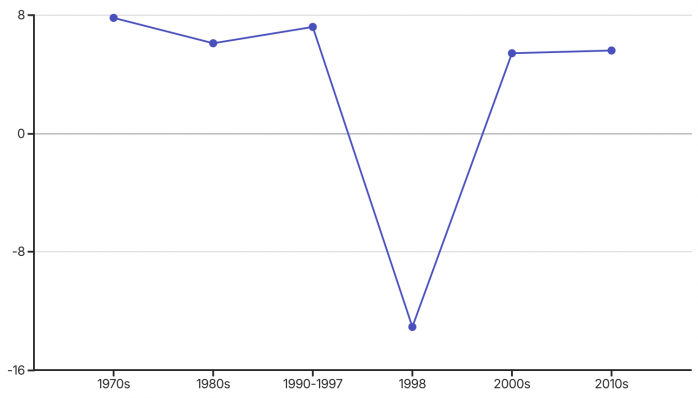
The crisis triggered social unrest and riots, ultimately leading to Suharto’s resignation in May 1998 after 32 years in power. This marked the beginning of the “Reformasi” era.
Systemic Transition: From Autocracy to Democracy
The aftermath of the 1998 crisis marked the beginning of one of the most remarkable democratic transitions in modern history.
Following Suharto’s fall, Indonesia experienced political instability, with separatist movements gaining momentum and communal violence breaking out in several regions.
Between 1999 and 2002, the country amended its constitution four times. These reforms introduced direct presidential elections, decentralised power, strengthened human rights protections, and created new democratic institutions.
The democratic opening also allowed Islamic political parties to participate in the political system, although most adopted moderate positions that aligned with Indonesia’s secular traditions.
At the same time, Indonesia implemented major economic reforms, including banking recapitalisation, corporate debt restructuring, and stronger financial regulation.
These reforms helped establish Indonesia as a functioning democracy capable of peaceful transfers of power through multiple election cycles.
Overcoming Adversity: Indonesia’s Resilience
Indonesia’s modern history has been marked by several major crises.
The 2004 Indian Ocean tsunami killed more than 160,000 Indonesians and displaced hundreds of thousands, particularly in Aceh province. However, the disaster also created an opportunity for peace. In 2005, the government and Acehnese separatists signed a historic agreement that ended decades of conflict.
Indonesia also faced challenges during the 2007-08 Global Financial Crisis, although it performed better than many developed economies and maintained positive growth.
More recently, the COVID-19 pandemic hit Indonesia hard, producing one of the highest death tolls in Southeast Asia. Despite these challenges, the country has repeatedly demonstrated economic and political resilience.
Modern Indonesia: A Rising Global Power
Indonesia is now recognised as a stable democracy with growing regional and international influence.
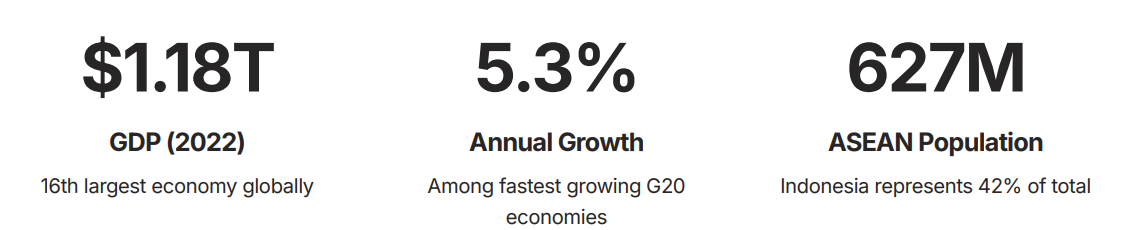
Its GDP reached $1.18 trillion in 2022, making it the 16th largest economy in the world. With annual growth of 5.3%, Indonesia is among the fastest-growing economies in the G20.
Indonesia is also the dominant power within ASEAN, representing 42% of the organisation’s total population. As ASEAN’s central force, Indonesia shapes regional initiatives related to trade, security, and political cooperation.
The country now aims to become a high-income economy by 2045, the centenary of its independence.
Indonesia’s global ambitions were demonstrated by its hosting of the G20 Summit in 2022 and its strategy of maintaining positive relations with both the United States and China while preserving its independent foreign policy.
The India-Indonesia Partnership: Changing the Face of Asia
The relationship between India and Indonesia could become one of the most important geopolitical partnerships in Asia.
Together, India and Indonesia would form the largest combined democratic alliance in history, representing nearly 1.7 billion people. This partnership offers an alternative to authoritarian models of governance in Asia.
The two countries also have complementary economic strengths that could reshape economic patterns across the Indo-Pacific region and beyond.
Their relationship is strengthened by deep cultural and historical ties that go back thousands of years, providing a basis for cooperation that goes beyond short-term interests.
Strategic Dimensions of the Partnership
The India-Indonesia relationship has multiple strategic dimensions with both regional and global implications.
As the two largest maritime powers in the Indian Ocean, India and Indonesia share an interest in protecting freedom of navigation, combating piracy, and preventing illegal fishing. Their cooperation could help build a maritime security architecture that supports regional stability.
Indonesia’s model of moderate Islam, together with India’s tradition of religious pluralism, offers a strong counter-narrative to extremist ideologies. This partnership can encourage religious moderation and interfaith dialogue across Asia and the Muslim world.
Although neither country seeks direct confrontation with China, their combined strategic influence provides a natural balance to Chinese dominance in Asia. Their partnership supports a multipolar regional order that protects the autonomy of middle powers.
The Time is Now: Seizing the Opportunity
Current geopolitical changes create an ideal opportunity for India and Indonesia to deepen their relationship.
Several trends make this moment especially favourable, including shifts in global supply chains away from China, growing interest in the Indo-Pacific, the post-pandemic focus on resilient economic ties, and the rising international influence of both countries.
India’s “Act East” policy and Indonesia’s “Global Maritime Fulcrum” doctrine also create natural areas for cooperation.
With Indonesia chairing ASEAN and India leading the G20, both countries have strong platforms to shape regional architecture and economic cooperation.
Closing the Knowledge Gap
One of the biggest barriers to stronger India-Indonesia relations is the lack of mutual understanding between the two societies.
The document proposes several initiatives to address this gap, including creating centres for Indonesian studies in India and Indian studies in Indonesia, expanding scholarship programmes, and increasing academic exchanges.
It also recommends introducing Bahasa Indonesia courses in Indian institutions and Hindi and regional Indian language programmes in Indonesia.
Business forums could facilitate direct engagement between companies in both countries, particularly in sectors such as the digital economy and green technology.
Cultural diplomacy, including film festivals, arts programmes, and cultural exchanges, could further strengthen ties between the two nations.
Economic Complementarities: Untapped Potential
Despite their potential, economic relations between India and Indonesia remain underdeveloped. Bilateral trade currently stands at around $21 billion, far below what might be expected based on the size of their economies.
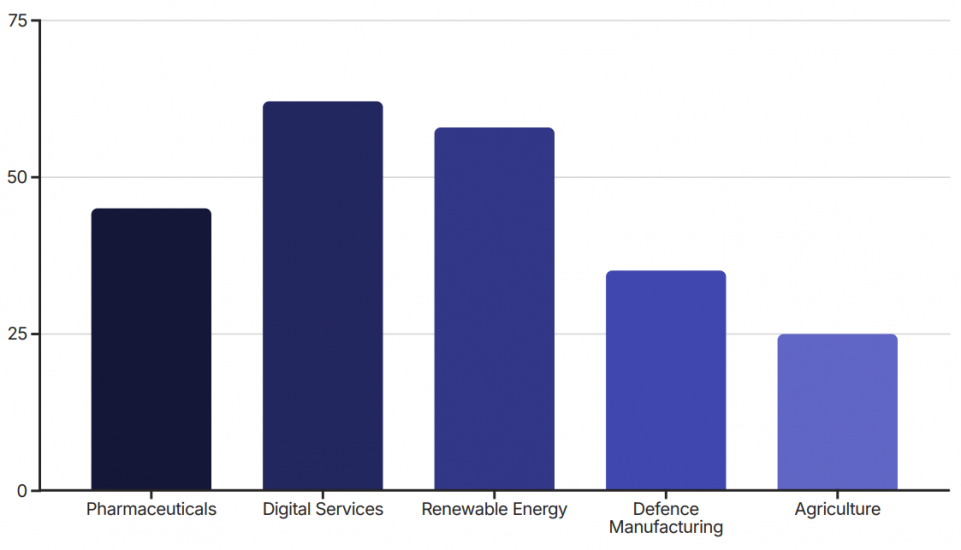
India’s strengths in information technology, pharmaceuticals, and education could help meet Indonesia’s growing needs in these sectors.
Indonesia’s resources in palm oil, coal, and minerals could support India’s industrial and consumer demand.
There are also opportunities for collaboration in advanced manufacturing, especially in defence production and automotive components.
The ASEAN-India Free Trade Agreement provides a framework for deeper economic engagement, although both countries still need to address non-tariff barriers and improve regulatory coordination.
Joint Action on Emerging Global Issues
India and Indonesia share similar positions on several emerging global issues, creating opportunities for coordinated action.
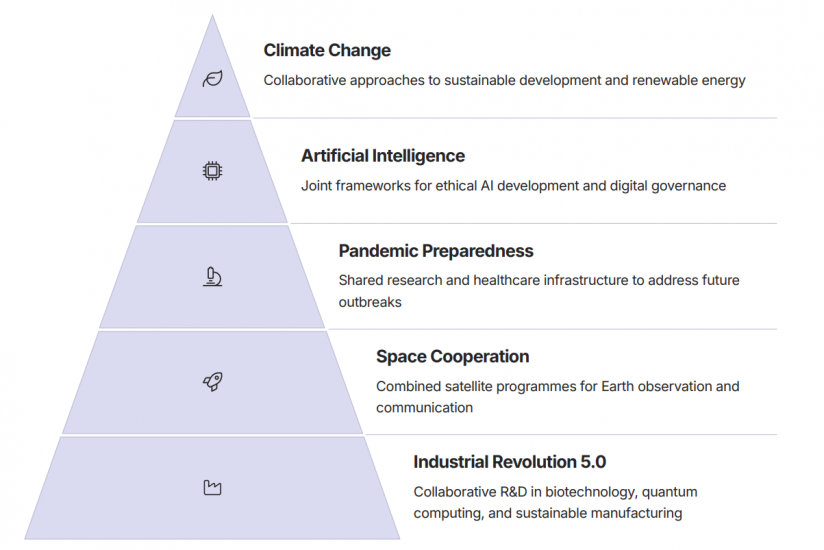
Potential areas for collaboration include climate change, renewable energy, artificial intelligence, digital governance, pandemic preparedness, healthcare infrastructure, space cooperation, biotechnology, quantum computing, and sustainable manufacturing.
By coordinating their positions in international forums and creating bilateral mechanisms for policy alignment, both countries can strengthen their influence on global governance while also addressing shared domestic challenges.
The Vision Forward: Constructing a Shared Future
The India-Indonesia partnership has the potential to move beyond traditional bilateral relations and become a transformative force in Asia.
Together, the two countries can become leading drivers of an Asian-led development model that combines economic growth with democratic values.
The proposal from the Arthashastra Institute emphasises that even small steps in cooperation can produce major benefits. Academic exchanges, military exercises, trade facilitation, and coordinated climate policies can all contribute to building a comprehensive strategic partnership.
As Asia enters what many describe as the “Asian Century,” the relationship between India and Indonesia may become one of its most important examples: a partnership between a continental power and a maritime nation that combines demographic strength, economic dynamism, and democratic resilience. Through deliberate engagement and strategic vision, these two ancient civilisations can help reshape Asia and drive the next phase of the Asian Century.
Dr Satish Chandra Mishra Executive is Director and Founder at Arthashastra Institute in Bali, Indonesia