Forty-Third EGROW Shadow Monetary Policy Committee Meeting on November 28, 2025
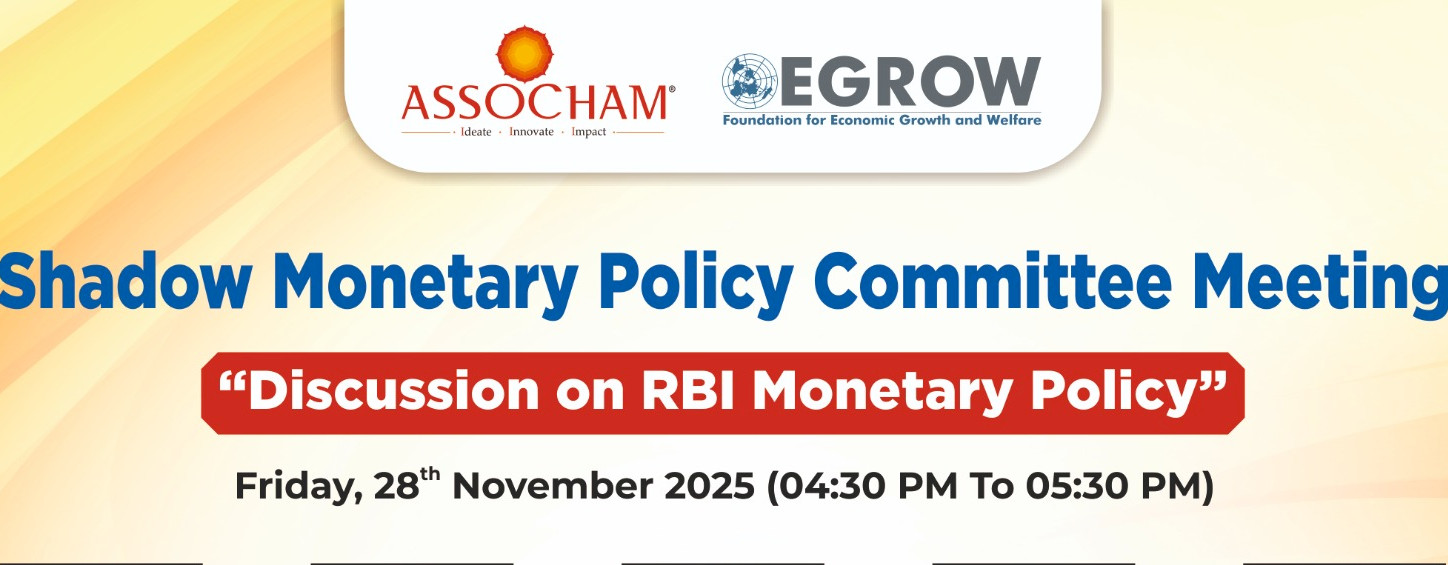
Recording of the Event
Key Takeaways
- Good Growth in real GDP in first two quarters of the current year
- There is need to analyse the nominal GDP
- The Rupee is weakening
- International Reserves are rising
- Inflation is very low and real interest rates are very high
- There is Adequate support for rate cut
- Durable liquidity is declining in the economy. This is important for transmission mechanism.
Recommendations of EGROW Shadow MPC
Members of EGROW — 4
Repo Rate
Pause – 0
Decrease by 25bps – 4
Stance – Neutral
Guests — 5
Repo Rate
Pause – 0
Decrease by 25bps – 5
Detailed Views by Members of the EGROW Shadow MPC
1. Dr. Ashima Goyal, Former Member, Monetary Policy Committee, Reserve Bank of India
There is an overwhelming consensus among economists now for a 25bps cut. The Governor has also acknowledged the space. A number of us at EGROW have been asking for a cut since August cut since there was clear space and repo levels were incompatible with flexible inflation targeting. The RBI was giving too much weight to base effects and mean reversion in its forecasts and has had to continuously bring them down by large amounts. It has been over-forecasting inflation since mid-2024. Real rates, which matter for demand, have been high for more than a year now. Since the 1970s, whenever ex-post real headline inflation adjusted rates persisted around 2%, growth was lower. Since monetary policy acts with a lag, ex-ante action reduces growth sacrifice.
Q2 FY26 growth has come in at 8.2%, but inflation below target implies growth is below potential. It should be clear that our potential growth is much above 6%. The reversal of the fiscal-financial tightening, and some repo rate cuts, has led to a turnaround from the 5.6% growth dip in Q2FY25, despite US tariffs. But there are some signs of slowing growth after the October GST boost. Core industry growth had fallen and urban unemployment has risen to 7%. There is still no sign of the trade agreement with the US, exports are slowing, further reducing demand—we cannot keep waiting for tariff cuts.
It is not always necessary to ‘wait and see ’, there are some things you know from theory and the functioning of the economy. In the RBI’s view there is a lot of uncertainty so it is better to wait—this is the old-style precautionary tightening against shocks. But there is no need for policy to be restrictive when inflation below the target band implies the absence of over-heating. Post pandemic policy has demonstrated the ability to counter external shocks. And the economy has shown its resilience again.
The other issue is that the change to neutral stance with hawkish language has weakened the pass through of repo rate cuts. Since 10 year Gsec yields went up, peaking at 6.57% in end October, banks did not need to reduce loan rates to compete. Recent refusal of auction bids and talk of space for cuts led to some softening, but it is still 6.51 today. A cut will help convince markets data-dependent cuts are possible in a neutral stance, especially since latest data suggests the government will be able to keep to its consolidation path despite tax cuts. Bank resistance to rate cuts has reduced since their profitability has sustained despite cuts. Household financial savings have risen, suggesting there is room, in a growing economy, for alternative savings avenues.
The neutral stance should be retained since it is not clear as yet that very low inflation will persist. If it does not, there is no room for multiple further cuts, but communication must clearly emphasize that data-based cuts are possible in a neutral stance.
2. Ms. Upasna Bhardwaj, Chief Economist, Kotak Mahindra Bank
Even as recent economic data suggest traction in activity, we see room for 25-50bp of additional rate cuts by the MPC. The soft inflation trajectory expected through FY26-27, high real rates and continued spare capacity points towards a 25bp of cut in December. We note that the forward guidance will have to be well balanced keeping all options open as data evolves. Furthermore, as system
Liquidity begins to dwindle, especially given the FX intervention related liquidity drain, we recommend RBI to take incremental liquidity easing measures through OMO purchases.
3. Dr. Charan Singh, CEO and Director, EGROW Foundation
India has recorded a high growth of 8.2 percent in Q2 and if we take the first half of the current fiscal year, it is 8.0 percent. This is significantly higher than 6.1percent recorded during April to September of the1st half of the previous year. This excellent growth rate is mainly because of the good policies that the government has Covid. The growth in private final consumption expenditure at 7.9 percent is quite high as compared with 6.4 percent in the previous year. Similarly, gross fixed capital formation has also been high at 7.3 percent as compared with 6.7 percent in Q2 of the previous year. This robust growth performance is despite the Trump’s tariffs.
The sectoral growth patterns also exhibit a robust performance.
Overall, on inflation, both CPI and WPI, the rate is very low. Therefore, I think that the real rate of interest is very high and a cut at this juncture is important. The economy is recording high growth and the need is to push it further.
The easing of interest rate cycle globally is encouraging and therefore it is important that we reduce the repo rate by 25 bases point at least and that we should continue with the neutral stance. Our objective has to be growth given that inflation is way below the target. Also 8.2% growth in the second quarter is promising. This means there are growth impulses and green shoots which are showing results.
4. Shri Siddhartha Sanyal, Chief Economist & Head- Research, Bandhan Bank
The transmission of the previous reduction in Repo rate is incomplete. Inflation rate is very low. This is time for another reduction of 25 bps.
Guest Panelists – Specialists from Market and Members from ASSOCHAM:
1. Shri Subhas C. Aggarwal, Chairman and Managing Director, SMC Group.
Key interest rate should be reduced by 25 basis points.
2. Sujit Kumar, Chief Economist, National Bank for Financing Infrastructure and Development (NaBFID)
Data developments since last monetary policy has affirmed the case for further monetary easing, especially with inflation falling below the target levels, and outlook seen benign for next four quarters.
Real interest rates at present remain restrictive. Given corporate revenue growth has slided to single digits territory, the interest costs will likely claim a bigger pie of earnings, undermining transmission. Bank credit has started to gain momentum, which may hit roadblocks if real rates remain restrictive.
Real GDP growth numbers seem to overstate strength of economy as deflator has fallen below 1%. The low nominal GDP growth also complicates achieving fiscal deficit and public debt ratios, without axing fiscal expenditure, which could be procyclical.
Trade deficit has grown wider, as the USA traiff disruptions play out. Rupee has been under pressure as investors weigh likelihood of India-USA trade deals in near future. With external sector challenges clouding outlook, there is case for synchronised play of fiscal and monetary policy levers. In any case, India's high growth promise is a better magnet for foreign money than interest differentials.
If the MPC chooses to continue the inflation vigilante role, the burden might be seen too heavy on fiscal policy, which could edge bond yields higher. This is avoidable.
Taken together, the case of reducing policy repo rate is strong. We expect the repo cut by 25 bps in December review with a guidance of more coming in future. The stance may be retained as "Neutral" provided the guidance is pro-easing, without losing flexibility to act in an uncertain environment.
3. Swati Saxena, Founder & CEO, 4Thoughts Finance
It is anticipated that the upcoming MPC meeting may opt for a measured reduction of 25 basis points in the policy rate while maintaining an overall neutral stance. Such an approach would support the current momentum of economic growth without introducing additional volatility.
A more accommodative stance or a deeper rate cut at this juncture could exacerbate the existing weakness of the rupee, thereby increasing the risks of imported inflation and external imbalance. Conversely, a moderate 25 bps reduction aligned with a neutral stance would help maintain macroeconomic stability while still providing incremental support to domestic demand.
In addition, greater clarity in the ongoing trade discussions between India and the United States is expected to contribute positively to currency stability. Reduced uncertainty in the external environment, combined with a calibrated monetary policy response, would strengthen the overall economic outlook and support sustainable growth.
4. Shri Arjun G. Nagarajan, Chief Economist, Sundaram Mutual
On the RBI policy, higher growth wouldn't ideally bring out thoughts of rate cuts from the RBI. But I think, with inflation expected to remain low and the govt having a fairly nimble hand on food inflation management, I think theres comfortably 50bps of rate cuts space to be delivered. If they want to give 50, i'd prefer they give it in one shot and be done with it, given the lags in monetary policy. But given that the RBI policy comes ahead of the Fed, maybe they would do a 25bps and another 25bps post the budget and be done with the entire cycle. So early 2027 would probably be the start of hikes or even later, if the Fed remains low and crude remains low. On market rates, the RBI probably would not matter much for the 10Y structurally, unless there is a positive disruption from Crude or US bond prices. On broad macros, three positive things to note: 1. There is the need to acknowledge growth and nurture the same without too much fear around inflation; given that the current backdrop is far from inflationary and is expected to remain so into the near to medium term. Therefore the 8.2% GDP growth number is a positive given than it comes from manufacturing, services and private consumption. One must remember that the extra bump up in growth comes from a continued easing in deflator growth. Lastly, a concern though is how nominal GDP that dropped 200bps to 8.8% y/y, remains thereabouts at 8.7% and could put pressure on the fiscal spends and the deficit that is measured on nominal GDP. 2. Good to see the small shakeup seen in the Rupee, withthe markets coming to realise that the rupees trajectory is a continued, gradual and contained depreciation; atleast into the medium term. 3. Also good to note that US yields have come off by more than 50bps over the last couple of months with not much change on India 10Y yields. This has given a continued positive hedged spread on yields, helping FII debt inflows to continue. Especially at a time when FII equity outflows prevail.
5. Shri Raman Agarwal, CEO, FIDC.
Allowing NBFCs to Offer Credit Lines on the UPI
Currently, only banks and small finance banks can offer this facility. We believe that extending it to regulated NBFCs will strongly align with India’s financial inclusion and digital credit goals. NBFCs have historically been at the forefront of financial innovation in India, often introducing new products and reaching customer segments before traditional banks.
Allowing NBFCs to offer credit lines via UPI would leverage this deep outreach to advance financial inclusion further. UPI-based credit could be extended to customers who have UPI access but lack credit cards or bank credit today. NBFCs, with their business experience in these customer segments, are well placed to identify creditworthy individuals in underserved segments and provide them these UPI-linked credit lines. This will bring many new borrowers into the formal credit system in a responsible manner.
Better End-Use Monitoring
One distinct advantage of channeling credit through UPI is the digital trail of end-use. Every transaction made using a UPI-linked credit line is recorded and tagged to a specific merchant or recipient. This means that unlike a lump-sum loan disbursal (where the lender has little visibility on how the money is spent), a UPI credit line allows the lender to monitor the usage of funds in real time. It provides transparency in both usage and repayment, making it easier for lenders and borrowers alike to track loan utilization.
Crucially, this structure can also mitigate risks like loan stacking (where a borrower takes multiple concurrent loans from different lenders unbeknownst to each). The real-time data from UPI transactions enables lenders to assess a borrower’s current credit exposure and spending patterns, reducing the chance of invisible debt accumulation. Industry observers note that such UPI-based credit lines foster a healthier credit ecosystem where consumers build credit history and lenders can more accurately assess risk.
Allowing NBFCs to extend credit via UPI will democratize consumer credit, providing a much-needed alternative to traditional credit cards. . Empowering NBFCs to offer UPI-linked credit lines means potentially hundreds of millions of consumers who do not have a credit card could access a comparable credit facility through their UPI app.
In conclusion, we believe that permitting NBFCs to offer credit lines on the UPI platform is a timely and progressive step that aligns with India’s digital financial inclusion objectives. NBFCs have a proven record of innovation and outreach, which can be harnessed to make UPI-linked credit a success – reaching new customer segments, offering agile and affordable credit, and doing so under the ambit of regulated institutions. The technology and market demand are already in place: UPI is ubiquitous, and consumers (especially those without credit cards) are seeking convenient credit. By extending the regulatory enabling of UPI credit lines to NBFCs, the RBI would unleash the next wave of innovation in digital lending, much as it did with payments. This measure would democratize access to short-term credit by creating alternatives, foster healthy competition, and accelerate the formalization of credit at the grassroots level.
NBFCs Report to CRILC But Do Not Have Access to CRILC Data
The rationale for reporting Special Mention Accounts (SMA) to the Central Repository of Information on Large Credits (CRILC) is to enable early detection and reporting of financial stress in borrowers’ accounts. SMA categories help lenders identify accounts that show signs of stress before they turn into Non-Performing Assets (NPAs).
The CRILC was established by the Reserve Bank of India (RBI) to collect, store, and disseminate credit information on large exposures. Lenders are required to report credit information on all borrowers with aggregate fund-based and non-fund based exposure of ₹50 million and above.
For access, initially, only banks were mandated to report to CRILC. Over time, Systemically Important NBFCs have also been brought under the CRILC reporting framework. This inclusion aims to bring more transparency and better risk management across the financial sector. However, NBFCs do not have access to the CRILC database.
Suggestion:
-
NBFCs must be provided with access to the CRILC database to assist in credit risk management, like banks. Else, the purpose of bringing transparency and prevention of frauds gets defeated.
-
It is logical and prudent to ensure that NBFCs have full access to a Central Repository to which they report to and thus contribute.